artLIVE – Designed to ‘dissolve’ into the natural landscape, the Olive Houses stand as a testament to the sustainable architectural philosophy shaping a greener future.
Amid the fast-paced rhythm of urban life, where towering buildings seem to swallow the sky and noise becomes an inevitable companion, we often find ourselves longing for a moment of true tranquility. If you’ve ever yearned to reconnect with untouched nature, the Olive Houses, tucked away in lush olive groves in Spain, are the kind of escape you simply shouldn’t miss.

Here, architecture and nature blend seamlessly, offering a serene refuge far from the clamor of modern life. It’s a stay where nature itself becomes the chief architect, gifting each visitor a rare sense of stillness and clarity.
Architecture and nature interwoven within a heritage landscape
Perched high on Mallorca’s Tramuntana mountain range with sweeping views of the Mediterranean Sea, the Olive Houses, designed by the architectural firm Mar Plus Ask, consist of two charming, independent dwellings. Each is embraced by ancient olive trees, thousands of years old, standing tall on stacked man-made stone terraces.
In this secluded haven, the only sounds you’ll hear are the wind whispering through the leaves and the faint chime of sheep grazing in the distance. The unspoiled landscape, harmonizing with rustic vernacular design, embodies a priceless heritage, and is precisely why Tramuntana has been recognized as a UNESCO World Heritage Site.
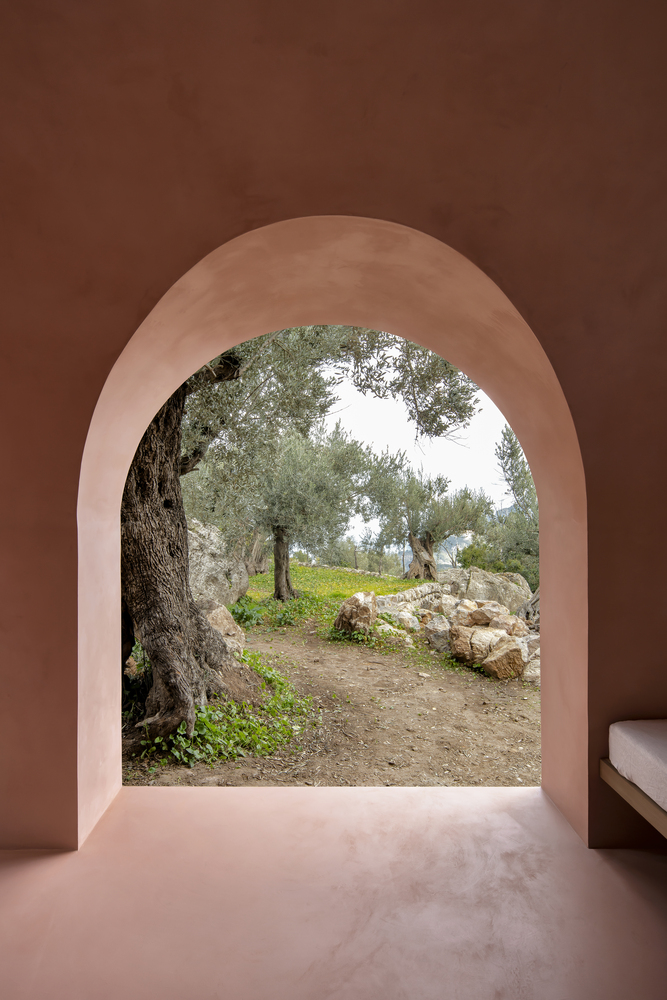
One of the defining features of these houses lies in their pure authenticity. There is no electrical grid inside; instead, they rely solely on solar power and water sourced from a nearby spring. This approach minimizes resource consumption and reduces environmental emissions, creating a truly “green living” experience for every guest who stays here.
Olive Houses — Simple little dwellings amid olive groves
To preserve the rugged natural topography of the hillside, Mar Plus Ask designed two compact structures: one dedicated to sleeping and rest, and the other for cooking and daily living. The main house is partially embedded into an existing stone terrace, a thoughtful intervention that keeps the interior cool during the sweltering summer months.
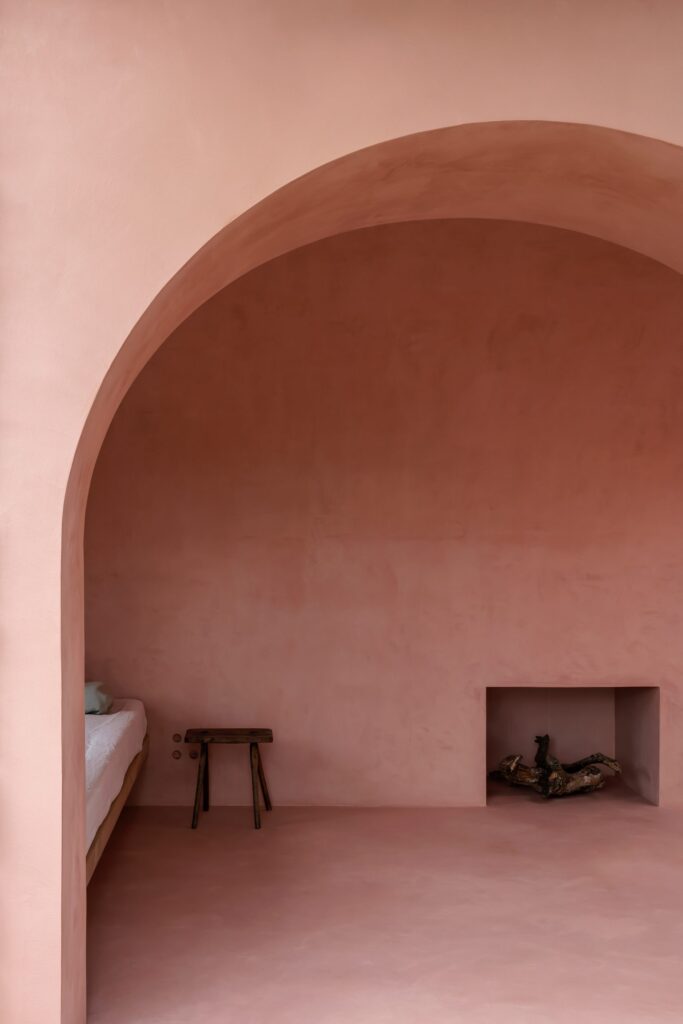
At the first house, the entrance is sheltered by a teak sliding door; once opened, it reveals a generous vaulted opening that invites daylight to pour in. Inside, softly rounded surfaces and gentle slopes evoke the feeling of stepping into a natural cave. The walls, ceiling, and floor are all coated in a soothing blush pink, a hue carefully selected to harmonize with the soft green shade beneath the surrounding olive trees.
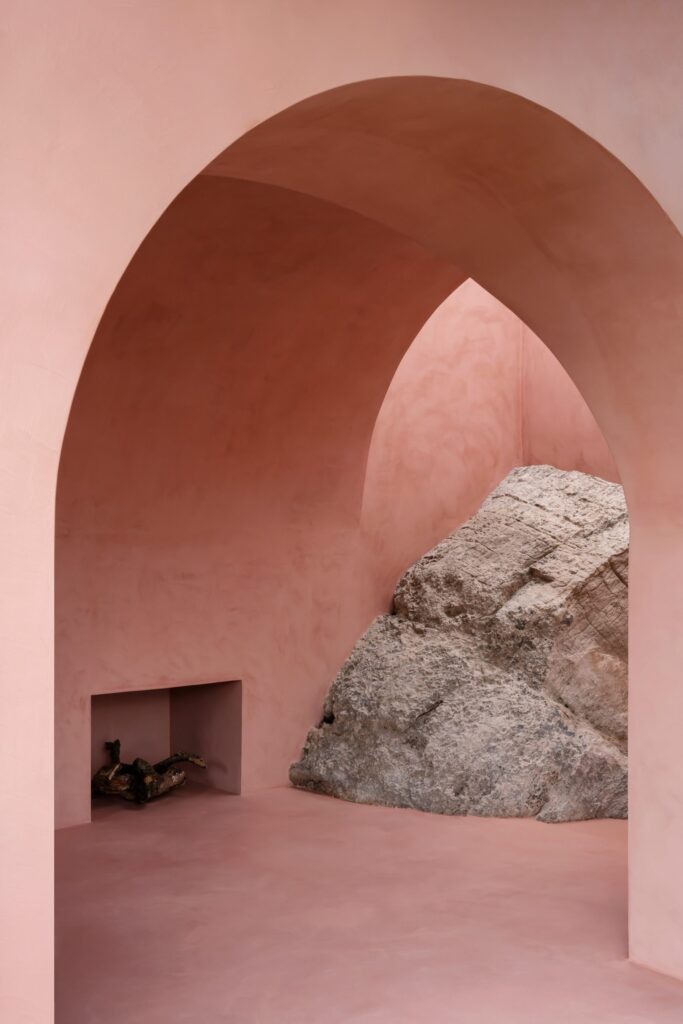
One corner of the house is built tightly around a natural rock that the designers intentionally preserved. Just above it, an opening allows daylight to stream directly down, highlighting the rock’s raw beauty. According to the studio, this natural element has become the home’s true “art piece,” while the architecture surrounding it serves merely as a backdrop — a lightbox that lets it shine.
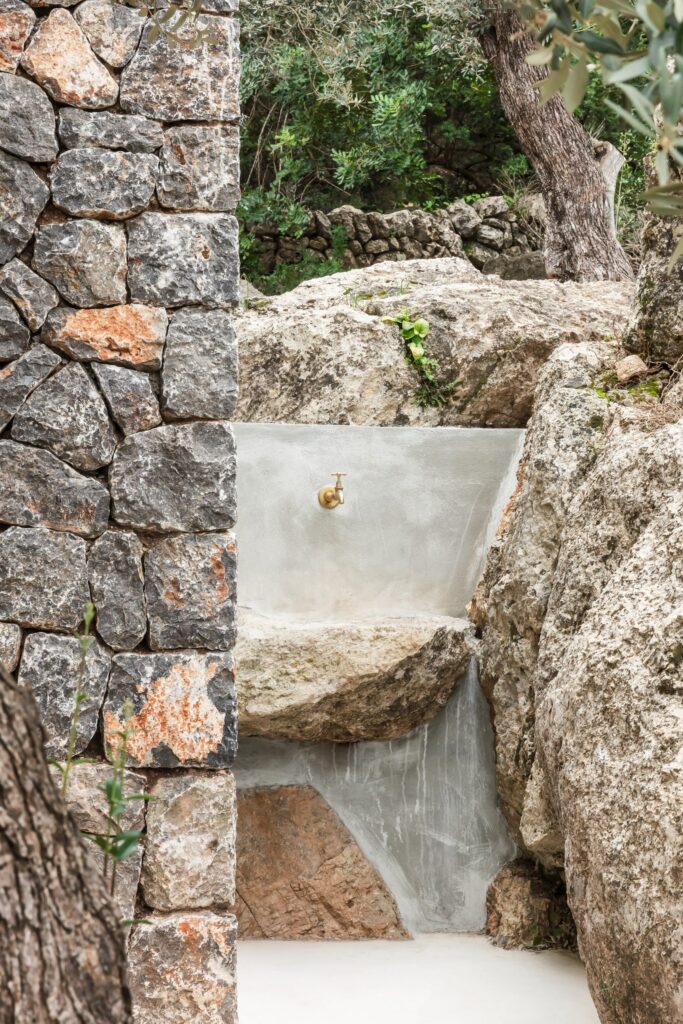
Right next to the rock, the designers skillfully placed a small water tap, while across from it sits a compact single bed for resting. Stepping outside, visitors encounter a large sink crafted from natural stone, seamlessly integrating with the surrounding landscape.
The second house was renovated from a dilapidated old storage building. Mar Plus Ask enveloped it in a deep purple hue, inspired by the upper surface of olive leaves, darker, yet catching a subtle glimmer under the sunlight.

To address the initially cramped space that couldn’t accommodate cooking utensils, the designers created a recessed area within a 60cm-thick wall. This clever intervention expanded the space, making it feel more open and airy.
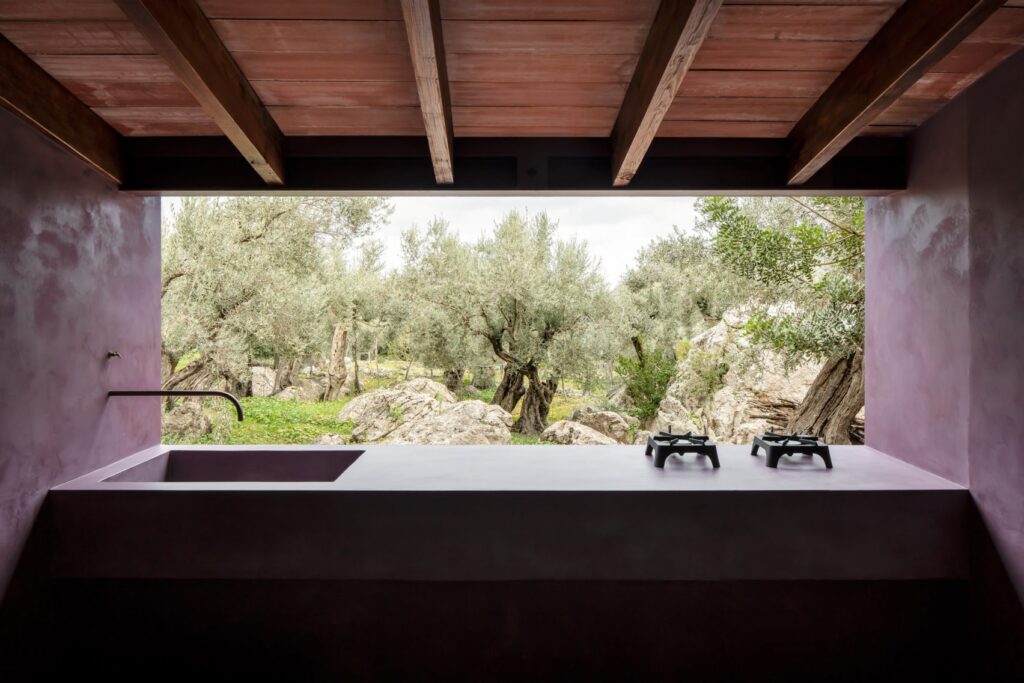
Disconnected from the electrical grid, all kitchen activities are pared down to the essentials: two small gas stoves and a wood-fired oven, just enough for cozy meals. Water is sourced directly from a nearby spring, preserving the purity of nature. Despite its minimalism, the house is fully equipped with a bathroom, ensuring comfort while living harmoniously with the environment.
About Mar Plus Ask
Mar Plus Ask is an architectural firm founded in 2015 in Berlin, Germany, by architects Mar Vicens and Ask Anker Aistrup. Their approach is rooted in rigorous research, combining academic foundations with hands-on building experience.
The style and aesthetic values of Mar Plus Ask are deeply influenced by their Scandinavian and Mediterranean roots. They consistently respect what already exists while seeking fresh expressions, creating contemporary spaces that are at once humble and full of character — and, above all, designed to endure sustainably over time.
Each project by Mar Plus Ask is developed from the unique story of its site: considering its historical context, current conditions, as well as environmental, social, and economic factors.
Photos: Piet Albert Goethals
References:
Dezeen
Est Living